Journey to Powerful Growth Design Review
First Look at the Artwork
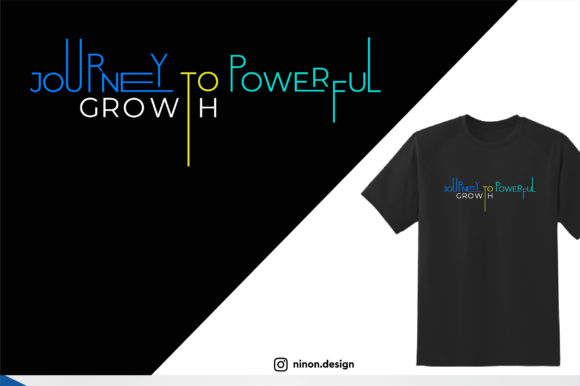
Opening the folder for Shirt Design-Journey to Powerful Growth, I immediately felt the appeal of its hopeful, forward-moving theme. The composition suggests upward momentum, soft curves, and an organic flow that feels personal without being too whimsical. It’s the kind of graphic that would stop a browser at a craft fair or catch the eye in an Etsy feed — not because it shouts, but because it whispers something genuine.
From an embroidery designer’s perspective, the mood matters. This design brings a sense of quiet encouragement, which translates beautifully onto wearable items and gift products. The visual personality leans toward minimalist inspiration, making it a versatile asset for small shops, handmade product lines, or a single custom order that needs emotional weight without clutter.
Real Stitch Thinking: From Screen to Fabric
Last week I had a client request a custom tote bag for a life-coaching retreat. She wanted a design that felt like a personal milestone marker. I pulled up Shirt Design-Journey to Powerful Growth in my software, not as an embroidery file yet — it’s a graphic template — but as a base to plan digitizing. The SVG and transparent PNG gave me clean lines to trace, and the AI and EPS files kept vector precision for scaling. Right away, I could see how the thinner elements would need careful stitch mapping.
I decided to test it on a mid-weight canvas tote. That fabric holds detail well, but it’s unforgiving if your stitch density is too high. The design’s gentle curves might look elegant in print, but on a sewing machine, they could turn into puckered edges if I wasn’t mindful. So I planned a mix of satin stitch for the main silhouetted shape and a light fill stitch for any broader areas, keeping the density low enough that the canvas wouldn’t ripple.
Where the Image Really Works
The greatest strength of Shirt Design-Journey to Powerful Growth in embroidery is its simplicity. Without excessive fine detail, it’s easier to maintain clarity across different fabric textures. I could see this working on a soft cotton sweatshirt as a chest emblem, on a linen apron, or even on a set of tea towels for a boutique kitchen line. The shape feels balanced — not too wide, not too tall — so it fits many common hoop sizes without awkward cropping.
Another sweet spot is baby and nursery decor. The gentle theme and uncluttered outline adapt well to pastel thread palettes on muslin swaddles, bibs, or small pillow covers. For an Etsy seller building a collection around mindful gifts, this design could anchor a product listing with a narrative that buyers connect to emotionally.
Practical Embroidery Notes for the Studio
Since Shirt Design-Journey to Powerful Growth is delivered as standard graphic file formats — SVG, PNG, EPS, AI, PDF — you’ll need to either digitize it yourself or work with a digitizer who can translate the paths into stitch commands. The clean vectors help a lot; auto-tracing rarely works straight from a PNG, but the EPS or AI gives you exact contours. I always recommend testing on scrap fabric first, even if the vector looks perfect on screen. Thread behaves differently than ink.
- Check your thread color contrast against the base fabric. A pale gray thread on natural linen can get lost; consider a slightly deeper tone to keep the shape visible.
- Pay attention to stitch direction inside the main form. Let the stitches follow the curved flow to enhance the sense of movement.
- Use a cutaway stabilizer for knits and a tear-away for woven fabrics, especially on stretchy t-shirt material. The design’s lines may pull if you rely on a lightweight backing alone.
Working With Different Fabrics and Hoop Sizes
If you’re placing this on a baby onesie or a curved cap, scale matters. Shirt Design-Journey to Powerful Growth won’t translate well if reduced too much — the already slender strokes could turn into a messy running stitch that lacks definition. I’d keep the width above 3 inches for most machines. For hats, stick to the front center panel where the surface is flatter, and increase the pull compensation slightly to prevent gaps between stitches and fabric grain.
Dark fabrics present another design moment. The PNG transparent version lets you mockup the graphic against black or navy backgrounds easily. You’ll quickly see if the thread choice needs to be lighter or if you need an underlay to make the embroidery pop. I often run a black-and-white mockup print just to gauge brightness; it reveals contrast problems before I waste a thread cone.
Commercial and Personal Use Possibilities
As a graphic template, Shirt Design-Journey to Powerful Growth lives in the Graphics category, which means its original purpose spans beyond embroidery — think printable mockups, decals, card making, or mug presses. For my embroidery business, though, it becomes a raw material for creating finished products that carry a premium feel. A stitched version on a high-quality tote bag elevates a simple graphic into something tactile and lasting.
Small shop owners can use it across multiple product types: an embroidered patch, a sweatshirt design, or even a cloth journal cover. The theme is broad enough to fit wellness brands, personal development workshops, or spiritual gift lines. When a customer picks up a hand-embroidered pillow cover with this artwork, the texture and subtle sheen of the thread gives it a value that a printed image just can’t match.
Customer Perception and Brand Consistency
From a seller’s point of view, the design helps build a cohesive handmade brand. Its restrained style won’t clash with other items in your collection, and it photographs well against both light and dark backgrounds. I’ve seen many embroidery products suffer because the design looks chaotic in listing photos; Shirt Design-Journey to Powerful Growth avoids that entirely with its clean, aspirational silhouette.
For personalized gifts — a new mom’s tote, a graduate’s sweatshirt, a wellness coach’s apron — this graphic gives you a canvas that feels meaningful without being overly literal. That emotional undercurrent is exactly what attracts buyers who are scrolling for a present that says “I see your growth.”
Where to Be Extra Careful
No design is universally perfect. The airy, thin portions might need reinforcing if the product will see frequent washing, like a kitchen towel. I would add a slight underlay to those delicate lines so they don’t wear out after several cycles. If you’re selling to customers who prioritize durability, mention that you’ve reinforced the stitching or offer a care guide.
On highly textured fabrics like terry cloth or fleece, the thread can sink and blur the edges. I’d reserve this design for smoother surfaces unless you’re comfortable with a distressed look. Also, if you plan to use it as a digital mockup to sell the embroidery files themselves (not just finished goods), double-check the licensing terms provided by the creator. The listing says “Thank you for visi” — likely a cut-off — so assume standard personal and commercial use for physical items, but confirm before reselling as a digitized embroidery file.
Final Designer Verdict
Shirt Design-Journey to Powerful Growth is a graphic template that crosses over into embroidery territory with grace, as long as you’re ready to digitize thoughtfully. It’s not a ready-to-stitch file, but for a designer who already works with vectors, the supplied formats give you a solid foundation. The mood is right for heartfelt handmade products, and the visual structure holds up well under the needle if you respect fabric, stabilizer, and scale.
In my studio, it earned a spot in my quick-reference folder for custom gift orders. The first time I saw it stitched on a canvas tote, the thread created a beautiful, low-shine relief that made the words and shape feel like an heirloom detail rather than a printed decal. That kind of transformation is exactly why I keep going back to embroidery — and why a well-chosen graphic template can become something much more than a simple shirt design.